



Ceiling Fans & Exhaust
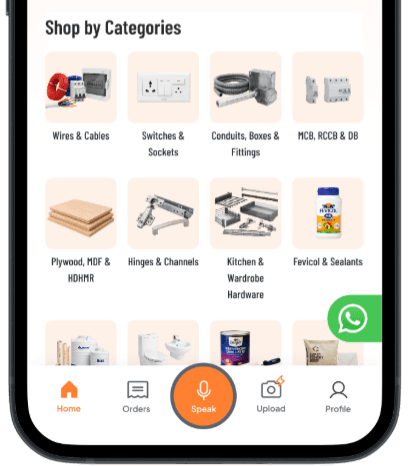
 Wires & Cables
 Switches & Sockets
 MCB, RCCB & DB
 Conduits, Boxes & Fittings
 Plywood, MDF & HDHMR
 Hinges & Channels
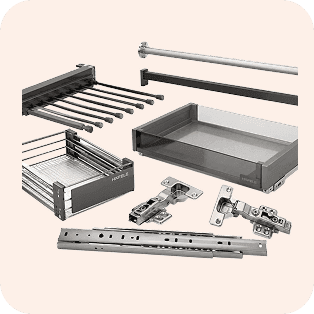 Kitchen & Wardrobe Hardware
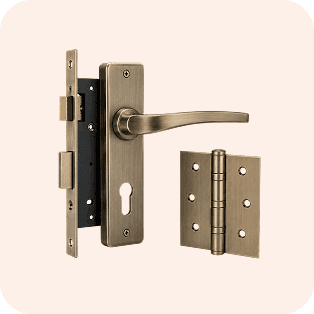 Door Hardware, Locks & Handles
 Fevicol & Sealants
 Tiling, Waterproofing & Cement
 False Ceiling
 Paints, Putty & Sundries
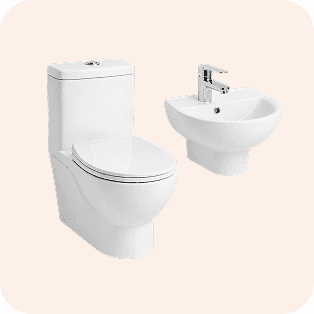 Sanitary & Bath Fittings
 Kitchen Sinks & Faucets
 Bath & Kitchen Accessories
 Plumbing Pipes, Fittings & Tanks
 Tools & Accessories
 Lighting
 Fans, Geysers & Invertors
 Bolts, Screws & Fasteners
Sub Categories

Free Delivery*
Earn Fixxly Coins
1 Fixxly Coin = ₹1

30-Min Delivery*




Ceiling Fans & Exhaust - Buy Atomberg BLDC Ceiling Fans, Crompton & Polycab Exhaust Fans Online
Ceiling fans and exhaust fans are the two air-movers every Indian home relies on - one to keep you cool, the other to keep the air fresh. A good ceiling fan cools a room efficiently and quietly for years while sipping electricity; a good exhaust fan clears steam from the bathroom and smoke and grease from the kitchen before they settle into walls and ceilings. At Fixxly, our ceiling fans and exhaust range covers Atomberg, Crompton and Polycab - energy-saving BLDC ceiling fans, conventional induction ceiling fans, bathroom exhaust fans, kitchen and cooking exhaust fans, and high-speed ventilation options. This guide explains fan types, what BLDC actually means for your bill, how to size a fan to a room, and how to choose the right exhaust fan for each space.
Ceiling fans: how to choose the right one
A ceiling fan is judged on three things - how much air it moves, how much power it draws, and how quietly it does both. The most important recent change in the market is the shift from conventional motors to BLDC, which is why "bldc fan" has become one of the fastest-growing searches alongside the evergreen "ceiling fans". Fixxly stocks BLDC and conventional fans from Atomberg, Crompton and Polycab, so you can compare all three on the same page.
BLDC ceiling fans (the energy-saving choice)
BLDC stands for brushless direct current. A BLDC fan uses an electronically commutated motor that is dramatically more efficient than the traditional induction motor. Atomberg is the brand most closely associated with BLDC technology in India, and Fixxly stocks their BLDC range alongside Crompton's. Where a conventional ceiling fan draws around 70 to 80 watts, a BLDC fan moves a similar volume of air on roughly 28 to 35 watts - often less than half the electricity. Over a hot Indian summer running many hours a day, that gap turns into a meaningful saving on the power bill, which is why BLDC fans, despite a higher purchase price, usually pay back the difference within a couple of years. BLDC fans also run cooler, are typically quieter, and almost always come with a remote and speed memory.
Conventional (induction) ceiling fans
Standard induction ceiling fans remain popular because they cost less upfront and are proven and simple. Crompton and Polycab both offer strong conventional ranges on Fixxly. For rooms used only occasionally, or where budget is the priority, a good conventional fan is still a sensible choice. The trade-off is higher running cost over time compared with BLDC.
Sizing a ceiling fan to the room
Fan size is measured by sweep - the diameter of the circle the blades trace, in millimetres. Matching sweep to room size is what makes a fan feel powerful rather than weak.
- Up to about 9 by 9 feet (small bedroom, study): 900 mm sweep.
- Around 10 by 10 to 12 by 12 feet (standard bedroom, living room): 1200 mm sweep - the most common size in Indian homes.
- Larger halls and open living areas: 1400 mm sweep, or two fans for very large rooms.
- Small utility spaces, balconies and kitchens: 600 to 750 mm sweep, or a wall-mounted fan.
An undersized fan in a big room feels feeble no matter how fast it spins, while an oversized fan in a small room is wasteful. Sweep is the number that matters most after motor type.
What is air delivery and why does it matter?
Air delivery, measured in cubic metres per minute (CMM), tells you how much air a fan actually moves - the real measure of cooling. A higher CMM means a stronger breeze. Read air delivery together with power consumption to judge efficiency: a fan that delivers high CMM on low watts is doing its job well. This service-value ratio is exactly where Atomberg's BLDC fans pull ahead, delivering strong airflow for far fewer watts. When comparing ceiling fans, look past the RPM headline and check CMM against wattage.
Exhaust fans: clearing steam, smoke and stale air
An exhaust fan pulls stale, humid or smoky air out of a room and pushes it outside, protecting both your comfort and your walls. Choosing the right exhaust fan depends entirely on the room, because a bathroom and a kitchen have very different jobs to do - which is why buyers search separately for "exhaust fan", "bath exhaust fan" and "cooking exhaust fan".
Bathroom exhaust fan
A bath exhaust fan removes the moisture and steam that otherwise breed mildew, peel paint and fog mirrors. Fixxly stocks Crompton and Polycab exhaust fans for this exact job. For a bathroom, the size (diameter) and air delivery should match the room volume so the air is changed several times an hour. A quieter, moisture-rated fan is worth choosing for a bathroom used daily.
Kitchen and cooking exhaust fan
A cooking exhaust fan faces a tougher job - hot air laden with grease, smoke and cooking odours. Kitchen exhaust fans from Crompton and Polycab are built with more powerful motors and higher air delivery to clear that load quickly, and grease-resistant blades and bodies help them survive an Indian kitchen. A dedicated cooking exhaust fan keeps grease off your walls and cabinets and stops odours spreading through the home. For heavy cooking, a larger, high-speed fan or a chimney-grade extraction is the right call.
Sizing an exhaust fan
Match the exhaust fan diameter and air delivery to the room. A larger room, or one that generates a lot of steam or smoke, needs a bigger fan or higher CMM to change the air enough times per hour. An underpowered exhaust fan leaves moisture and odour behind; a correctly sized one clears the room quickly and quietly.
How much do ceiling fans and exhaust fans cost?
Fan price is driven by motor type, size, features, brand and build quality. Here is how to weigh value across ceiling fans and exhaust fans rather than buying on sticker price alone.
- Atomberg BLDC ceiling fans cost more upfront than induction fans but recover the difference through much lower running cost, especially in rooms used many hours a day. Over a fan lifespan of years, BLDC is usually the cheaper choice overall.
- Larger sweep and higher air delivery cost more, but under-sizing to save money leaves a room that never feels cool.
- Features add price - remote control, speed memory, decorative finishes and reversible operation. Choose the features you will actually use.
- For exhaust fans, a higher-CMM, grease-resistant Crompton or Polycab kitchen fan costs more than a basic bathroom fan, because it does a harder job. Match the spend to the room.
A practical approach: for rooms in constant use, prioritise a BLDC ceiling fan from Atomberg for the running-cost saving; for occasional rooms, a good conventional Crompton or Polycab fan is fine. Size every fan to its room, and pick a kitchen exhaust fan powerful enough for how you cook. This gives comfort and efficiency at a controlled cost.
Why Fixxly for ceiling fans and exhaust fans
Fixxly is a single platform for the whole room, and fans are one part of a lighting and fans range that sits within ten full categories spanning every trade in a home. Every fan is genuine Atomberg, Crompton or Polycab: on Fixxly you can pair ceiling fans and exhaust fans with the ceiling lights, battens and strip lights that share the same room, and the switches, wiring and MCBs that power them - all in one order, delivered in 30 minutes.
| Fixxly | Others | |
|---|---|---|
| Brand assurance | Genuine Atomberg, Crompton and Polycab, verified | Authenticity harder to verify, especially online |
| Delivery speed | 30 minutes, from a nearby hub | Same-day if in stock locally, otherwise 1-5 days |
| Complete room in one order | Fans, ceiling lights, switches, wiring and MCBs together | Usually needs multiple shops or sellers to gather everything |
| Returns on a bad fitting | Straightforward replacement policy | Policies vary, and can be slow for small parts |
Fan features worth paying for - and ones you can skip
- Remote control and speed memory: standard on most Atomberg BLDC fans and genuinely convenient - set the speed, and the fan remembers it after a power cut. Worth having.
- Energy star rating: a higher-rated fan confirms lower running cost. On a fan used daily, this is the feature that pays you back, not just a badge.
- Reversible / winter mode: some fans reverse direction to circulate warm air in cold months. Useful in colder regions, largely irrelevant in hot ones.
- Anti-dust coating: blades that shed dust stay balanced and keep airflow up with less cleaning. A modest, practical benefit.
- Decorative finishes and underlights: purely aesthetic. Choose them for the look, but know you are paying for appearance, not performance.
Frequently asked questions about ceiling fans and exhaust fans
What is a BLDC fan and is it worth it?
A BLDC fan uses a brushless direct current motor that consumes far less electricity than a conventional induction fan - often less than half the watts for similar airflow. Atomberg is the leading BLDC brand Fixxly stocks. For any fan that runs many hours a day, a BLDC fan is worth the higher purchase price because the energy saving recovers the difference within a year or two.
Which brands does Fixxly stock for fans?
Fixxly stocks genuine Atomberg, Crompton and Polycab fans - Atomberg for BLDC and smart features, and Crompton and Polycab across both BLDC and conventional ceiling and exhaust fans, so you can compare all three brands on price, features and running cost in one place.
What size ceiling fan do I need?
Match the sweep to the room: 900 mm for a small bedroom or study, 1200 mm for a standard bedroom or living room, and 1400 mm for a large hall. An undersized fan feels weak in a big room, while an oversized fan wastes energy in a small one.
What is the difference between a bathroom and a kitchen exhaust fan?
A bath exhaust fan is sized to remove steam and moisture and can be quieter and lighter-duty, while a cooking exhaust fan needs a more powerful motor, higher air delivery and grease-resistant construction to clear smoke and grease from an Indian kitchen.
Do ceiling fans need much maintenance?
Very little, but regular dusting of the blades matters, because accumulated dust unbalances the fan, causes wobble and reduces airflow. Exhaust fans should be cleaned periodically too, since grease and dust choke their output over time.
Explore other categories
Fans and ventilation are part of a fully finished home, and Fixxly stocks every category around them. Complete the electricals with electrical consumables and accessories and conduit, boxes and fittings, light the room with LED outdoor lights and strip lights, and build the ceiling itself with ceiling board and tiles and grid and ceiling systems. For the wider renovation, browse interior paints, plywood, CPVC pipes and fittings and bath fittings. Everything a home needs is a click away on Fixxly.

Built to support
every job,
big or small
FIXXLY